AI Scoring Rubrics
Objective Evaluation
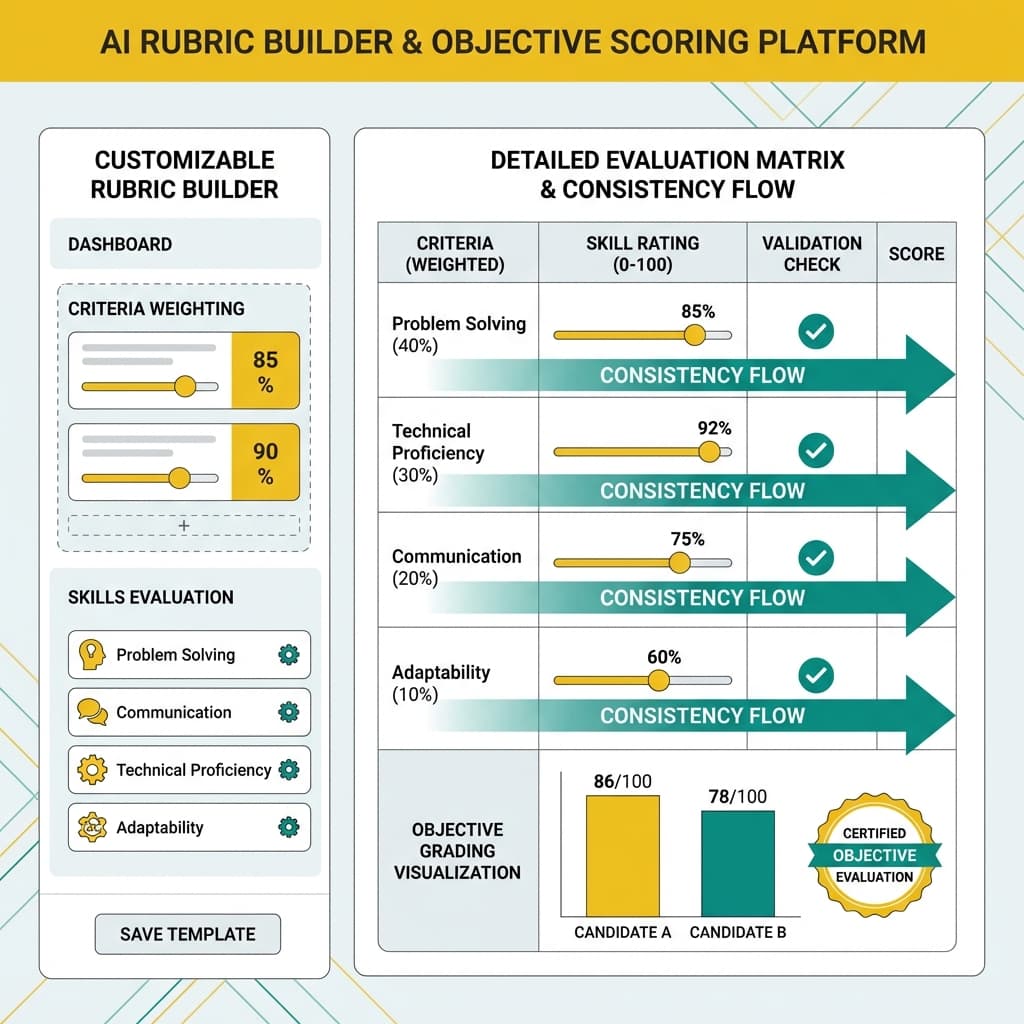
Define weighted competencies once and score every candidate against the exact same criteria, with automatic consistency checks and bias detection built in. The result is objective, defensible evaluations that hold up across interviewers, panels, and hiring rounds.
Manual scoring is where fairness quietly breaks down. One interviewer weighs communication heavily, another fixates on a single weak answer, and the same candidate ends up with wildly different scores depending on who happened to review them. InterviewFi replaces gut-feel ratings with customizable rubrics that lock in the competencies and weights that matter for each role. Every response is scored against identical criteria, flagged when ratings drift out of pattern, and screened for bias signals before a number ever reaches your shortlist.
Key Benefits
- Weighted competencies tuned per role
- Identical criteria for every candidate
- Automatic consistency drift detection
- Built-in bias signal flagging
- Transparent score breakdowns by skill
- Reusable rubric templates across teams
- Calibrated scoring across interview panels
- Audit-ready evaluation records
How It Works
Define Competencies
Choose the skills that matter for the role and assign each a weight. Start from a template or build a custom rubric in minutes.
Score Responses
Every answer is evaluated against your rubric using clear criteria, not impressions. Each competency receives its own justified score.
Check Consistency
The system compares scores across candidates and reviewers, flagging outliers and ratings that drift from the established pattern.
Detect Bias
Evaluations are screened for bias signals tied to non-job-relevant factors, surfacing anything that needs a second look before decisions are made.
With vs Without InterviewFi
| Feature | With InterviewFi | Without InterviewFi |
|---|---|---|
| Scoring Criteria | Identical weighted rubric for all | Varies by interviewer |
| Competency Weighting | Configurable per role | Implicit and inconsistent |
| Consistency Checks | Automatic outlier detection | None |
| Bias Detection | Built-in signal flagging | Relies on self-awareness |
| Audit Trail | Score-level justification logged | Scattered handwritten notes |
Common Use Cases
"Our panel scores used to swing by twenty points for the same candidate. With weighted rubrics and consistency checks, everyone now evaluates against the same bar, and our debrief meetings are half as long."
Frequently Asked Questions
QCan I customize rubrics for different roles?
Yes. You can build a unique rubric for every role, choosing the competencies and assigning the weights that matter most. Save them as templates so your whole team scores the same way every time.
QHow does bias detection actually work?
The system screens evaluations for patterns tied to non-job-relevant factors and flags ratings that look influenced by them. It does not auto-reject anyone; it surfaces signals so a human can review and keep decisions fair and defensible.
QWhat happens when scores are inconsistent?
Consistency checks compare ratings across candidates and reviewers and flag outliers that drift from the established pattern. You get an alert with the specifics so you can recalibrate before the score affects your shortlist.
QIs the scoring defensible if we are audited?
Yes. Every score is tied to a specific competency, weight, and justification, with a complete record of the criteria applied. That structured, documented trail is exactly what supports a defensible hiring decision.